

Pakistan’s New Guardian in the Sky
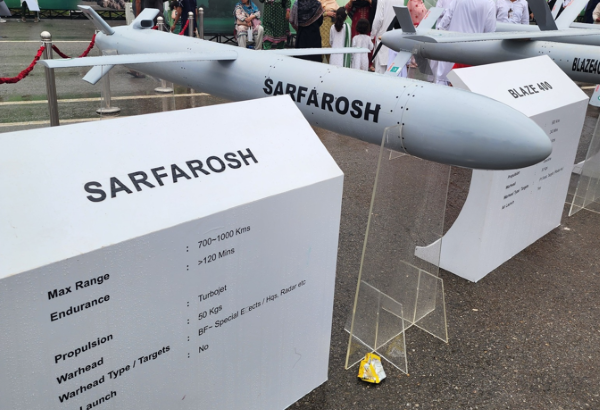
Pakistan has reportedly unveiled a new kamikaze drone named “Sarfarosh,” which is said to be part of its expanding unmanned aerial systems portfolio. Early reports suggest that the drone is designed for long-range precision strike missions and could strengthen modern battlefield capabilities. However, official technical specifications have not yet been independently verified, and most available information is based on defense commentary and secondary reporting.
Some reports claim that the “Sarfarosh” kamikaze drone may be capable of striking targets at distances exceeding 300 kilometers, while other sources suggest a potential range of more than 1,000 kilometers. Because of these conflicting figures, analysts caution that the actual operational range remains uncertain until confirmed by official defense disclosures or test data. Despite this uncertainty, the reported development reflects a growing global shift toward unmanned and autonomous strike systems.
What is a Kamikaze Drone?
A kamikaze drone, also known as a loitering munition, is an unmanned aerial system designed for single-use missions. Unlike reusable surveillance drones, these systems are programmed to locate a target and then crash into it while carrying an explosive payload. As a result, they combine the features of a drone and a missile in one platform.
Because of this hybrid design, kamikaze drones are considered cost-effective alternatives to traditional guided missiles. They can be deployed in large numbers, provide flexible targeting options, and reduce operational costs. In addition, they are increasingly used in modern warfare for precision strikes on high-value targets.
Reported Features of the “Sarfarosh” Drone
According to available defense analysis, the “Sarfarosh” drone is believed to include advanced navigation and targeting systems. These systems may allow the drone to operate autonomously or with minimal operator input. Furthermore, reports suggest that it carries a high-explosive warhead designed for maximum impact upon collision.
Another commonly reported feature is low-altitude flight capability. This allows the drone to potentially avoid radar detection and move closer to targets without being easily intercepted. As a result, such systems are often considered difficult to defend against using conventional air defense mechanisms.
However, it is important to emphasize that these features have not been officially confirmed in detail. Therefore, all technical descriptions remain subject to verification.
Strategic Importance in Modern Defense Systems
If the reported capabilities are accurate, the “Sarfarosh” drone could represent a notable advancement in Pakistan’s unmanned defense technology. Analysts suggest that such systems may be used for border surveillance, targeted strikes on hostile installations, and rapid-response operations in conflict scenarios.
Moreover, kamikaze drones are becoming increasingly relevant in global military strategy. Many countries are investing in similar technologies due to their flexibility and cost efficiency. In addition, they allow forces to engage targets without risking pilot lives, which significantly changes operational planning in modern warfare.
Nevertheless, experts also note that effectiveness depends on several factors, including electronic warfare resistance, guidance accuracy, and integration with broader defense systems. Therefore, real-world performance is often more important than theoretical specifications.
Verified Information vs Reported Claims
At this stage, most details regarding the “Sarfarosh” drone remain unverified. While some reports suggest extended ranges and advanced stealth capabilities, official defense authorities have not released comprehensive technical documentation.
As a result, analysts recommend treating current specifications as preliminary information rather than confirmed operational facts. This distinction is important in defense reporting, where early announcements often evolve as more data becomes available through testing and deployment.
Broader Impact on Defense Technology Development
Despite limited verified information, the reported introduction of the “Sarfarosh” drone highlights a broader trend in defense modernization. Countries worldwide are increasingly shifting toward unmanned aerial systems for surveillance and strike missions. This shift is driven by the need for precision, reduced operational costs, and enhanced tactical flexibility.
If further confirmed, systems like “Sarfarosh” could also contribute to domestic defense manufacturing growth. In addition, they may encourage greater self-reliance in developing advanced aerospace technologies. However, experts stress that long-term impact depends on production scale, reliability, and integration into operational defense frameworks.
Conclusion
Overall, the reported “Sarfarosh” kamikaze drone reflects ongoing advancements in unmanned military technology. While its exact specifications remain unverified, the concept aligns with global trends in autonomous strike systems. Further official disclosures will be required to fully assess its operational capabilities and strategic significance.
FAQ
What is the Sarfarosh kamikaze drone?
The Sarfarosh is a reportedly new unmanned kamikaze drone said to be developed for long-range precision strike missions, though official details are not confirmed.
How far can the Sarfarosh drone fly?
Reports vary widely, suggesting ranges from over 300 km to more than 1,000 km. However, these figures remain unverified.
What is a kamikaze drone used for?
Kamikaze drones are used for single-use attack missions where the drone itself crashes into the target while carrying explosives.
Is the Sarfarosh drone officially confirmed?
No fully verified technical details have been officially released, and most information is based on early reports.
Why are kamikaze drones important in modern warfare?
They are cost-effective, precise, and reduce risk to personnel, making them increasingly important in modern military strategies.