

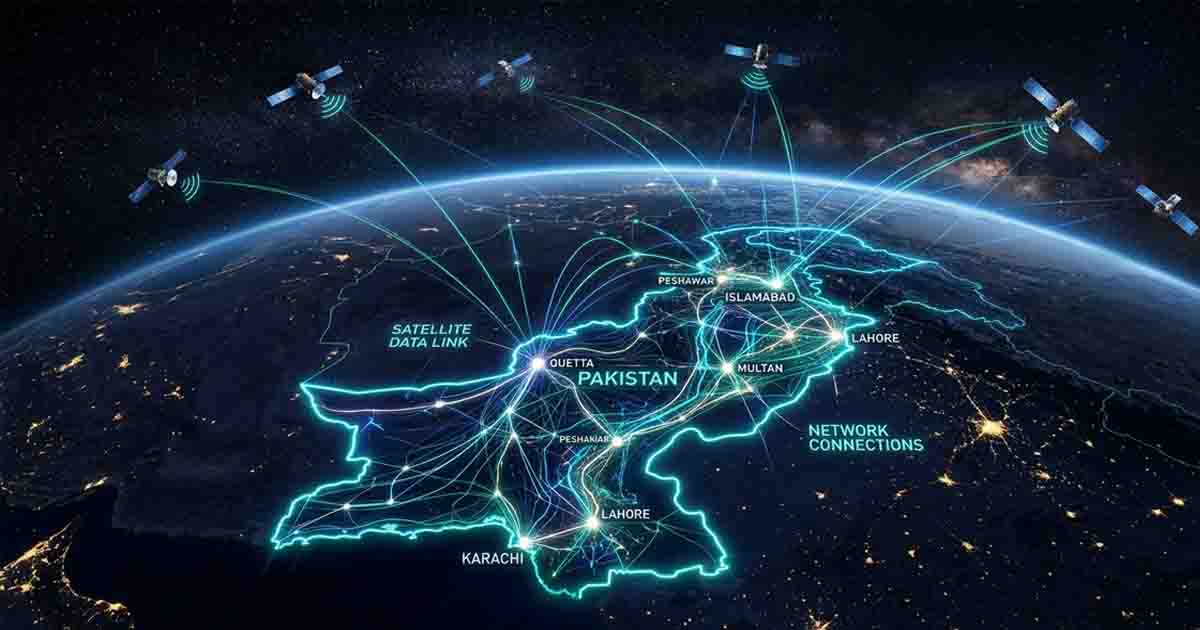
Pakistan’s wait for satellite internet is almost over.
After years of delays and growing frustration, the government has officially confirmed that the regulatory framework for satellite internet is in its final approval stage. Global giants like Starlink are registered and ready. The only thing standing between you and high-speed internet from space is a cabinet signature.
Here is what is happening, why it matters, and what comes next.
The Big News: What the Government Actually Said
Federal IT Minister Shaza Fatima Khawaja told Parliament directly — the satellite internet licensing framework is done. The Pakistan Telecommunication Authority (PTA) has completed its Fixed Satellite Services (FSS) licensing document and it is headed to the federal cabinet for final approval.
At the same time, the Pakistan Space Activities Regulatory Board (PSARB) has wrapped up its draft regulations for Low Earth Orbit (LEO) satellite systems. Public consultation is complete. The paperwork is done.
This is not a rumor. This is not another empty promise. This is the most concrete progress Pakistan has ever made toward launching satellite internet.
Why This Matters for Every Pakistani
Think about the millions of Pakistanis in Balochistan, Gilgit-Baltistan, rural KPK, and interior Sindh who have never experienced reliable internet. No fibre cables reach their villages. Mobile signals drop the moment you leave the main road.
Satellite internet does not need cables or cell towers. It needs a dish, a power source, and a clear sky — and suddenly a farmer in Turbat has the same internet connection as someone sitting in a Karachi office.
That is not just a technological upgrade. That is a life-changing shift.
Which Companies Are Interested?
Pakistan is not depending on a single provider. Multiple global operators have expressed formal interest:
- Starlink (SpaceX) — USA The frontrunner. Already registered with SECP and closest to launch. Delivers 50–250 Mbps speeds globally. Best suited for homes, remote workers, and small businesses.
- OneWeb (Eutelsat) — UK Focused on enterprise and backhaul solutions. Ideal for connecting telecom towers, remote schools, and government institutions in hard-to-reach areas.
- Shanghai SpaceCom (SSST) — China A LEO satellite operator aligned with the CPEC digital cooperation framework. Could offer a cost-competitive alternative to Western providers.
- Amazon Project Kuiper — USA Still in early global rollout but has shown interest in Pakistan. Could become a serious Starlink rival once fully operational.
- Satellogic Part of the broader satellite ecosystem entering Pakistan’s market, primarily focused on earth observation services.
Starlink is the only company that has completed SECP registration so far — giving it a clear head start over every other operator.
What the Framework Actually Covers
The FSS licensing framework covers broadband satellite internet, backhaul connectivity for ISPs, bandwidth provision, and corporate data services.
It also includes strict national security requirements. Satellite operators must set up a local gateway station in Pakistan within 18 months of licensing and comply with data routing and lawful interception rules. Pakistan is opening its skies to the world — but on its own terms.
Three institutions are working in lockstep: PSARB, PTA, and the Frequency Allocation Board (FAB).
Frequently Asked Questions
- When will satellite internet launch in Pakistan? No official date yet, but a late 2026 launch is realistic if cabinet approval comes through in the coming weeks.
- Will it work in remote areas? Yes — that is the entire point. No infrastructure needed beyond a dish and power supply.
- How much will it cost? Starlink globally charges $120–$150 per month. Pakistani pricing is unconfirmed, but affordable tiers for developing markets are expected.
The Bottom Line
Pakistan has been talking about bridging its digital divide for over a decade. Satellite internet is the tool that can actually do it — quickly and without waiting another ten years for fibre cables to reach every corner of the country.
The regulations are ready. The companies are ready. The technology is ready.
Now Pakistan just needs its government to sign on the dotted line.
The era of satellite internet in Pakistan is not coming. It is already at the door.
