

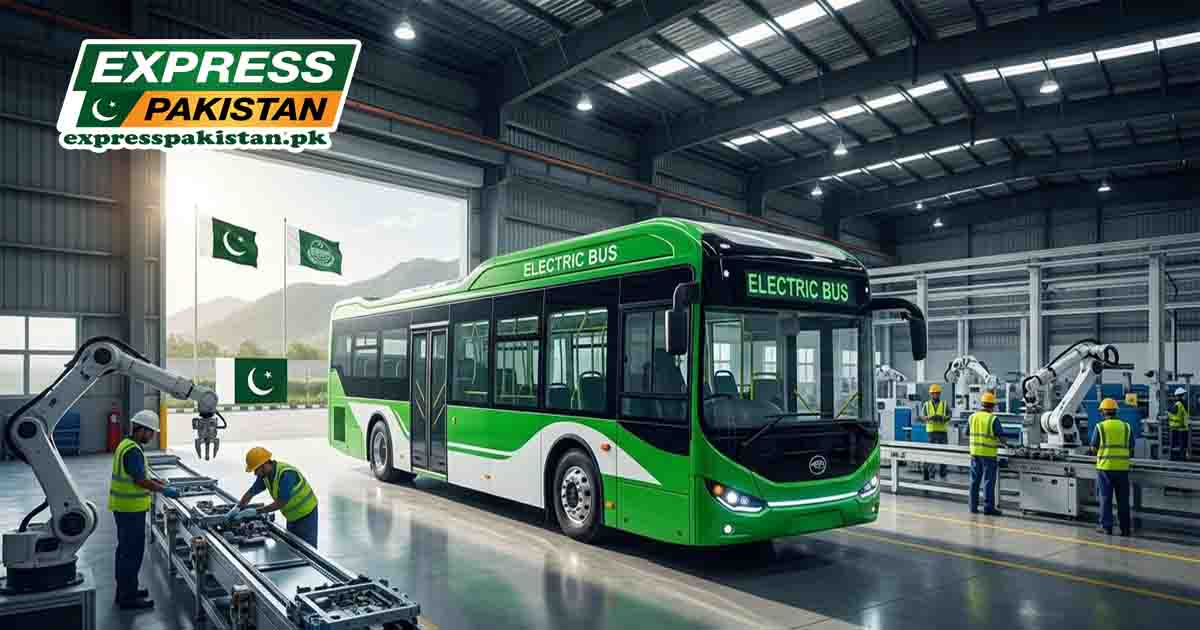
Electric Bus Production in Taxila is officially underway — and it marks one of the most important industrial decisions Pakistan has made in years. Heavy Industries Taxila (HIT), the state-owned manufacturing giant in Punjab, has received government approval to begin assembling electric buses domestically, ending Pakistan’s costly dependence on fully imported electric vehicles.
This single policy shift is expected to save the Pakistani government billions of rupees, create thousands of skilled jobs, and put 1,500 clean electric buses on roads across ten districts of Punjab.
Why Electric Bus Production in Taxila Changes Everything
For years, Pakistan has been purchasing electric buses from abroad at a staggering cost of $220,000 per bus. With the launch of electric bus production in Taxila, that price is projected to fall to $150,000 per unit — a saving of $70,000 on every single bus ordered.
Punjab’s plan to deploy 1,500 electric buses means the total savings from domestic production alone could reach $105 million (over 29 billion Pakistani rupees) — money that stays inside Pakistan’s economy rather than flowing abroad.
Chief Minister Maryam Nawaz has personally approved the programme, signalling the highest level of political commitment to making this initiative succeed.
What Is Being Built at the Electric Bus Production Facility in Taxila
The Heavy Industries Taxila facility is not simply bolting together imported parts. It is being developed as a complete electric vehicle manufacturing ecosystem, including:
- Advanced production lines meeting international quality standards
- Battery integration facilities engineered for Pakistan’s climate and varied terrain
- Technical training centres to develop a skilled EV workforce
- Local supply chain development to reduce reliance on foreign components
This comprehensive approach means Pakistan is building genuine industrial capability — not just performing final assembly on imported kits.
5 Major Benefits of Electric Bus Production in Taxila
1. Massive Cost Savings for the Government
Every locally produced bus saves $70,000 compared to an imported unit. Across 1,500 buses, that is over $105 million saved — funds that can be redirected to healthcare, education, or further infrastructure investment.
2. Thousands of New Jobs Created
The production facility will generate direct manufacturing employment in Taxila as well as indirect jobs across suppliers, logistics, maintenance, and technical services throughout Punjab.
3. Cleaner Air in Pakistan’s Cities
Lahore, Rawalpindi, and other major cities suffer from dangerous levels of air pollution. Replacing diesel buses with electric alternatives directly reduces particulate matter, nitrogen oxides, and carbon emissions on some of the most heavily trafficked urban routes in the country.
4. Foreign Exchange Conservation
Every bus manufactured locally is imported foreign currency saved. At a time when Pakistan’s foreign exchange reserves remain under pressure, import substitution in high-value sectors like electric vehicles delivers tangible macroeconomic benefit.
5. Long-Term Industrial Modernisation
Pakistan already builds military-grade armoured vehicles in Taxila. Applying that precision manufacturing expertise to electric buses creates a foundation for broader EV sector development — potentially including electric trucks, emergency vehicles, and full government fleet electrification in the future.
Punjab’s 1,500 Electric Bus Rollout: The Bigger Picture
Electric bus production in Taxila does not exist in isolation. It is the supply-side answer to Punjab’s ambitious public transport electrification plan: 1,500 electric buses deployed across 10 districts of the province.
This rollout will cover major urban centres and connect smaller cities and towns to clean public transport for the first time. Residents across Punjab will benefit from quieter, cleaner, and more modern buses — powered by electricity rather than diesel.
As production volumes increase, per-unit costs will fall further, making it financially viable to expand electrification even faster across Pakistan.
Pakistan’s Industrial Future Starts in Taxila
Electric bus production in Taxila is a statement about what kind of country Pakistan intends to become. Rather than permanently importing technology that could be built at home, Pakistan is choosing to invest in domestic capability, local talent, and long-term industrial self-reliance.
This is the kind of strategic thinking that built manufacturing powerhouses across Asia over the past five decades. South Korea, China, and Malaysia all began with state-backed manufacturing programmes in key sectors. Pakistan, with its large engineering workforce and existing industrial base in Taxila, has the foundations to follow that path in the EV era.
Electric bus production in Taxila marks a turning point for Pakistan’s transport sector, industrial policy, and environmental future. With government approval secured, production lines being installed, and 1,500 buses already committed for Punjab’s roads, the programme has everything it needs to succeed.
The numbers speak clearly: billions saved, thousands employed, and millions of Pakistani commuters riding cleaner, cheaper, locally built electric buses by 2026 and beyond.
Pakistan is not just buying a greener future — it is building one.