


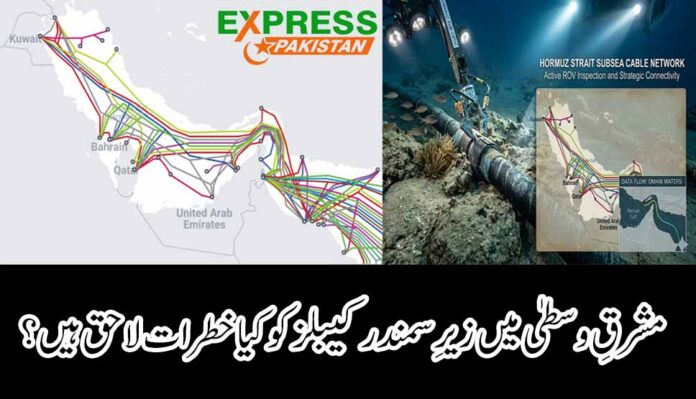
The Strategic Importance of Subsea Cables in the Strait of Hormuz
The Strait of Hormuz is a vital global artery. It serves as a transit point for oil and goods. It also acts as a critical corridor for the invisible flow of data through subsea cables in the Strait of Hormuz. Recent regional tensions—including incidents at data centers in the UAE and Bahrain—raise a serious question. Do these threats to telecommunications infrastructure extend to the fiber-optic networks under the sea?
What are the risks to subsea cables in the Middle East?
Subsea cable damage happens often. The International Cable Protection Committee reports about 200 incidents worldwide every year. Routine accidents cause most of these issues. Ship anchors and fishing activities are the primary culprits. This accidental damage poses a constant threat to operators. Consequently, specialized repair ships remain on standby for rapid intervention.
However, military actions in the region introduce new risks. Attacks on vessels can lead to indirect cable damage. For example, an attacked ship might lose control and drop its anchor. It then unintentionally drags that anchor across the seabed. In 2024, a vessel damaged by Houthi rebels in the Red Sea did exactly this. It dragged its anchor for two weeks before sinking. This single incident severed three major cables.
Another risk for subsea cables in the Strait of Hormuz involves the high density of lines. Companies need permits to lay cables in territorial waters. Because of geopolitical issues with Iran, operators concentrate almost all cables in Omani waters. This creates a single, localized point of vulnerability.
How critical are these cables for regional communication?
If a cable fails, the impact depends on the available backup routes. Network operators generally consider two main factors:
-
Infrastructure Diversity: Do they use multiple, separate cables?
-
Terrestrial Backups: Can neighboring countries provide enough land-based capacity?
The impact varies by country. Bahrain, Kuwait, and Qatar connect to the world through Saudi Arabia and Iraq. These land routes provide essential backup. Most UAE cables land in Fujairah. This location sits on the Gulf of Oman side. It offers more reliable connectivity than points deeper inside the Persian Gulf. Saudi Arabia uses its Red Sea coast for most international bandwidth. Only a few cables land on its Gulf coast.
The Bottom Line: Resilience and Limitations
No country relies 100% on subsea cables. However, terrestrial networks have limits. They often lack the massive capacity needed to handle all traffic during a total subsea failure. Furthermore, land-based networks are also vulnerable during conflicts.
On a global scale, data traffic between Europe and Asia remains relatively safe. These cables transit through the Red Sea. They stay approximately 900 miles away from the tensions in the Strait of Hormuz.
FAQ: Subsea Cables in the Strait of Hormuz
How many subsea cables are in the Strait of Hormuz? Multiple high-capacity cables pass through this narrow waterway. Most of these cables cluster in Omani waters to avoid geopolitical complications.
Can a single anchor drag shut down the internet? It is unlikely to shut down the entire internet. However, a single anchor can sever multiple cables at once. This slows down speeds and forces traffic onto backup routes.
How do companies repair subsea cables? Operators use specialized cable-repair ships. These vessels use robotic tools to find the broken ends. They then bring the cable to the surface and splice the fiber-optic strands together.
Are land-based cables safer than subsea cables? Not necessarily. Land cables avoid anchors and fishing nets. However, they are more vulnerable to construction accidents, theft, and direct military strikes during conflicts.