

Pakistan urges restraint in Venezuela crisis, a statement reaffirmed by the country’s Foreign Office amid recent international developments involving the United States and Venezuelan leadership. Islamabad has emphasized that tension reduction and diplomatic engagement are vital to prevent further instability and humanitarian consequences for civilians caught in the conflict.
The official statement comes in response to reports of U.S. involvement in Venezuelan affairs, which have sparked global concern and varied international reactions. Pakistan has urged all parties to prioritize dialogue, restraint, and adherence to international law to resolve the situation peacefully.
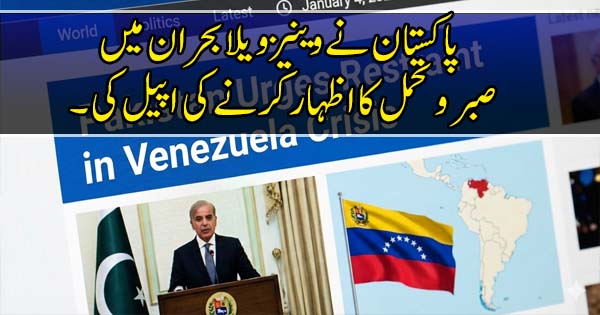
Pakistan’s Diplomatic Position on Venezuela
Ministry of Foreign Affairs – Pakistan: According to the statement, Pakistan urges restraint in Venezuela crisis situations by advocating diplomacy, dialogue, and respect for sovereignty. The Foreign Office noted that escalating tensions risk undermining regional stability and could have far-reaching implications beyond Latin America.
Pakistan’s stance reflects its broader foreign policy approach, which consistently supports conflict resolution through peaceful engagement, respect for the United Nations Charter, and non-interference in the internal affairs of states. Officials stressed that unilateral actions often complicate already fragile situations and make reconciliation more difficult.
The spokesperson reiterated that Pakistan attaches importance to international cooperation and multilateral frameworks when addressing global crises. Islamabad, the statement added, believes that sustainable solutions can only emerge through inclusive political processes that consider the interests and welfare of affected populations.
Background to the Current Crisis
The latest diplomatic reactions follow reports of US actions related to Venezuela that have intensified global debate. While details continue to emerge and claims remain subject to verification, the developments have sparked strong responses from several governments, prompting calls for de-escalation and lawful conduct under international norms.
Venezuela has faced prolonged political and economic challenges for years, including internal divisions, sanctions, and strained relations with Western nations. These pressures have contributed to humanitarian difficulties and large-scale migration, making stability in the country a matter of international concern.
Against this backdrop, Pakistan urges restraint in Venezuela crisis discussions, warning that further escalation could worsen existing hardships and reduce opportunities for constructive engagement.
Emphasis on International Law and the UN Charter
A key element of Pakistan’s statement was its emphasis on international law. The Foreign Office spokesperson stressed that all states must act in accordance with the principles enshrined in the UN Charter, particularly those relating to sovereignty, territorial integrity, and peaceful settlement of disputes.
Pakistan has historically supported multilateral diplomacy and the role of the United Nations in managing conflicts. In the context of Venezuela, officials underscored that respect for established legal frameworks is essential to maintaining global order and preventing precedent-setting actions that could destabilize other regions.
The statement also underlined the importance of avoiding rhetoric or actions that could inflame tensions further. According to the Foreign Office, restraint by all parties is a prerequisite for meaningful dialogue and confidence-building.
Global Reactions and Calls for De-escalation
Pakistan’s call aligns with reactions from several other countries that have expressed concern over rising tensions involving Venezuela. Many governments have urged all stakeholders to prioritize diplomacy and avoid steps that could lead to prolonged confrontation or conflict.
International observers note that crises involving major powers often have ripple effects, influencing geopolitical alignments and global markets. As such, voices advocating calm and negotiation have gained prominence in diplomatic circles.
By stating that Pakistan urges restraint in Venezuela crisis developments, Islamabad positions itself among countries seeking to lower the temperature of the situation and encourage political solutions rather than coercive measures.
Humanitarian Considerations
Beyond geopolitics, Pakistan’s statement implicitly highlighted humanitarian concerns. Prolonged instability in Venezuela has already affected millions through economic hardship, shortages of basic goods, and displacement. Any escalation, analysts warn, could exacerbate these challenges.
The Foreign Office emphasized that the well-being of civilians should remain central to all international responses. Protecting civilian lives and ensuring access to humanitarian assistance, the statement suggested, must take precedence over strategic or political calculations.
Pakistan has previously supported humanitarian efforts in crisis-affected regions and maintains that international engagement should aim to alleviate suffering rather than compound it.
Pakistan’s Consistent Foreign Policy Approach
The response to the Venezuela situation is consistent with Pakistan’s long-standing diplomatic principles. Islamabad frequently calls for dialogue, restraint, and peaceful conflict resolution in global crises, whether related to regional disputes or international flashpoints.
By reiterating that Pakistan urges restraint in Venezuela crisis conditions, the Foreign Office reinforced the country’s image as a proponent of stability and multilateralism. Analysts note that such positions help Pakistan maintain balanced relations across diverse geopolitical blocs while adhering to international norms.
Looking Ahead
As the situation involving Venezuela continues to evolve, Pakistan has indicated it will remain engaged through diplomatic channels and continue to monitor developments closely. The Foreign Office made clear that any lasting resolution will require patience, diplomacy, and a commitment by all parties to peaceful engagement.
Observers believe that statements like Pakistan’s, calling for de-escalation and restraint, contribute to shaping international discourse and may help create space for dialogue. While challenges remain, diplomatic voices urging calm are seen as essential to preventing further deterioration.
In conclusion, Pakistan urges restraint in Venezuela crisis developments as part of its broader commitment to peace, international law, and the protection of civilian interests. By advocating reduced tensions and diplomatic solutions, Islamabad has joined the global call for a measured and responsible approach to one of the most closely watched international issues of the moment.

