


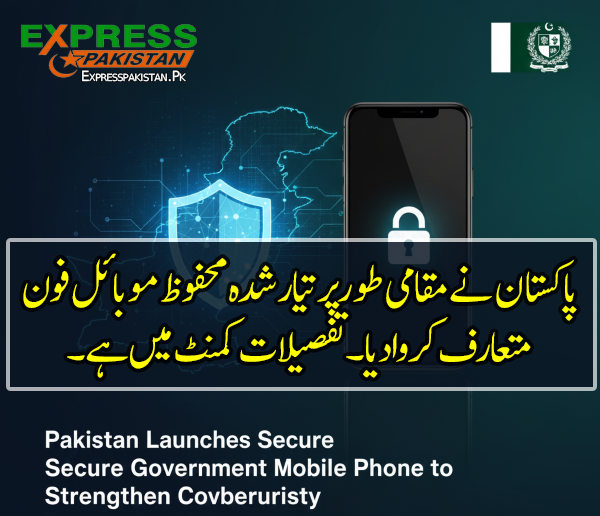
Pakistan’s National Telecommunication Corporation (NTC) recently introduced a groundbreaking government smartphone, also referred to as a secure mobile phone, designed exclusively for officials. As a result, the device strengthens cybersecurity, protects sensitive communications, and reduces reliance on foreign technology.
Fully Local Design Enhances Security
Hardware and Software Developed Entirely in Pakistan
NTC developed both the hardware and the operating system domestically. Consequently, the government maintains complete control over the mobile phone’s ecosystem and minimizes exposure to external cyber threats.
Locally Built Apps Keep Data Safe
In addition, all applications on the smartphone are created within Pakistan. Therefore, officials can rely on trusted software without risking security breaches from foreign apps.
Closed Network Communication Protects Sensitive Calls
Internet-Free Device Reduces Cyber Threats
The mobile phone does not connect to the internet, which reduces the risk of hacking or remote attacks. Furthermore, officials can communicate securely without worrying about online vulnerabilities.
Calls Only Between Similar Devices
Additionally, calls work exclusively between identical smartphones. This approach creates a closed network, keeping sensitive government conversations private and secure.
Strong Data Protection Measures
No Data Backup Ensures Confidentiality
 The mobile phone intentionally lacks backup functionality. Consequently, even if a device is lost or stolen, confidential information remains protected.
SIM Flexibility Maintains Usability
At the same time, the smartphone supports SIM cards from any Pakistani telecom provider. Thus, it balances security with usability for government officials.
Strategic Importance and Purpose
Safeguarding Government Communications
NTC developed this mobile phone to provide officials with a secure communication channel. Meanwhile, traditional messaging apps often carry vulnerabilities that could compromise sensitive information.
Strengthening Digital Sovereignty
By relying on a fully domestic smartphone, Pakistan enhances its digital independence. Moreover, officials can conduct confidential conversations without exposure to foreign technology risks.
Pilot Program and Future Expansion
Limited Testing Phase Underway
Currently, NTC is testing a small batch of these mobile phones. This pilot program allows officials to evaluate performance and security features before wider adoption.
Plans for Nationwide Deployment
After completing the pilot, the government plans to expand usage. However, expansion will require additional resources and careful planning to ensure effective deployment across ministries.
Challenges and Considerations
Balancing Security with Usability
Although the smartphone offers advanced security, the lack of internet and backup features may limit convenience for some users. Consequently, officials may need time to adapt to a completely new system.
Scaling Up Requires Resources
Furthermore, large-scale production depends on securing sufficient funding and managing logistics carefully. Without proper planning, nationwide rollout of these mobile phones could face delays.
Advancing Pakistan’s Digital Independence
Protecting Critical Departments from Cyber Threats
This smartphone helps secure communications for sensitive departments, including defense and executive offices. By controlling both hardware and software, Pakistan prevents cyberattacks and unauthorized access.
Reducing Reliance on Foreign Technology
Ultimately, this project represents a major step toward digital sovereignty. In addition, local development strengthens cybersecurity while limiting dependence on foreign mobile phones and systems.