

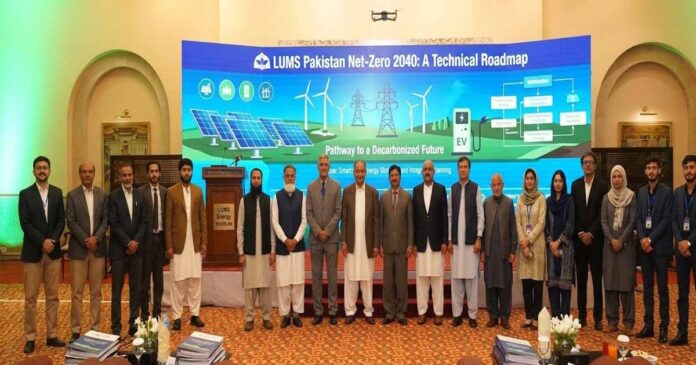
LUMS Pakistan Net-Zero 2040: A Technical Roadmap for Energy Independence
The LUMS Pakistan Net-Zero 2040 technical study concludes that Pakistan can transition to a clean electricity system within 15 years. This report was released by the LUMS Energy Institute (LEI). Specifically, the study titled ‘The Net Zero Transition’ provides a framework to ensure affordability and energy security.
Decarbonizing the National Power Grid
Currently, fossil fuels account for nearly 50% of national electricity generation. However, to realize the LUMS Pakistan Net-Zero 2040 vision, this share must drop to below 1%. Consequently, this shift would eliminate 78 million tons of carbon emissions. Therefore, the power sector will become the central driver of Pakistan’s climate commitments.
Furthermore, this transition is not merely an environmental goal. Instead, it is a strategic move to protect the economy. By reducing reliance on imports, Pakistan can avoid volatile price swings in the global fossil fuel market. The analysis uses detailed modeling to prove that indigenous renewable energy leads to long-term price stability.
Grid Modernization and Solar Integration
A primary challenge identified in the LUMS Pakistan Net-Zero 2040 analysis is the growth of distributed solar. Because consumers are adopting private solar panels quickly, the demand profile is changing. For instance, minimum grid demand may fall to 3,000 MW during daylight hours. To maintain stability, the report recommends several key infrastructure upgrades:
-
7,000 MW of Battery Storage: This is essential for balancing supply after sunset.
-
14,000 MW of Wind Energy: These corridors provide consistent power throughout the year.
-
8,500 MW of Utility-Scale Solar: These installations complement existing rooftop solar.
Investment and Economic Opportunities
The LUMS Pakistan Net-Zero 2040 roadmap requires an investment of USD 5.5 billion for grid reinforcement. According to Dr. Fiaz Ahmad Chaudhry, this is a practical blueprint for efficiency. Moreover, the evolution toward a flexible grid creates new avenues for private capital. Investors can now look toward battery systems and new stability technologies.
Additionally, Ms. Shaista Pervaiz Malik highlighted that the study helps align grid expansion with Sustainable Development Goals. Dr. Musadik Malik also added that success lies in sound policy. By using evidence-based roadmaps, Pakistan can finally secure a stable and affordable net-zero system.
FAQ: Understanding Pakistan’s Energy Transition
What is the LUMS Pakistan Net-Zero 2040 roadmap?
It is a technical study outlining a 15-year plan. The goal is to transition the electricity sector to renewable energy by the year 2040.
How much investment is required?
The roadmap requires USD 5.5 billion. This funding covers grid reinforcement, solar expansion, and wind power development.
Will this plan reduce electricity costs?
Yes, it should. By using local renewable resources, Pakistan can limit its exposure to expensive global energy markets.
What is the role of battery storage?
Battery storage is crucial for flexibility. Specifically, it manages the variability of solar and wind power to keep the grid stable.