


Haris Rauf Banned: ICC Disciplinary Rulings Highlight Commitment to Professional Standards in Cricket
The International Cricket Council (ICC) has recently issued a series of disciplinary rulings that have significant consequences for the teams involved. These decisions underscore not only the importance of following the rules but also the ICC’s firm commitment to maintaining professional standards within the sport. The sanctions affected players from both Pakistan and India, demonstrating that the ICC enforces its regulations universally, without bias or favoritism, regardless of intense team rivalries or high-profile matches.
Rauf’s Suspension Deprives Pakistan of a Key Bowler
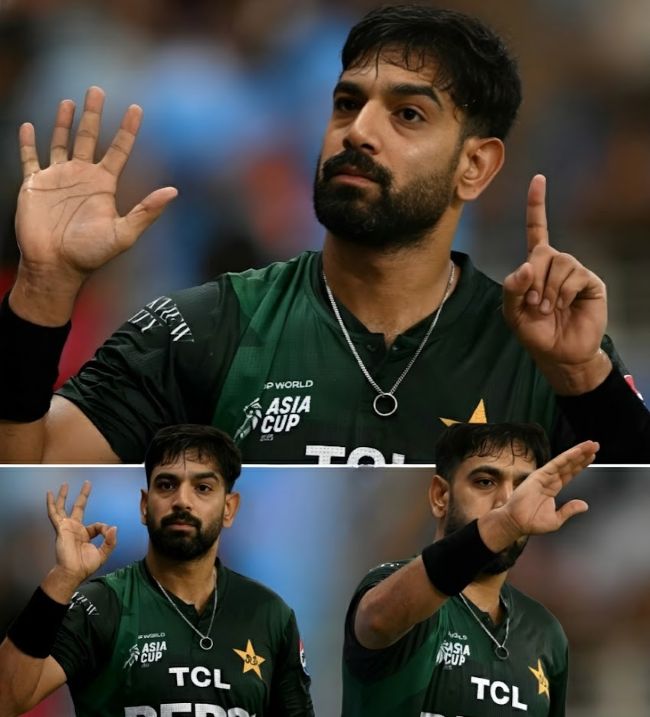
Pakistan’s fast bowler Haris Rauf has been suspended by the ICC and will miss two upcoming international matches. The suspension stems from a breach of the ICC Code of Conduct, which occurred during an on-field celebration. Following a wicket, Rauf performed a fighter-jet gesture, a move that match officials deemed inappropriate.
As a result, Pakistan will face South Africa without one of their most important bowlers. Rauf’s absence represents a major setback for Pakistan’s bowling strategy, particularly given the high stakes of international cricket. Beyond the immediate tactical implications, this suspension sends a broader message: players must express their passion in ways that align with the sport’s official boundaries. Emotional celebrations are part of cricket, but they cannot cross the line into actions that violate professional conduct rules.
Indian Players Also Face ICC Scrutiny
The ICC has also monitored the conduct of Indian players, emphasizing that the same standards apply globally. Star batter Suryakumar Yadav attracted disciplinary action after making politically charged remarks in a post-match interview. This violated the ICC’s neutrality rules, which prohibit players from making statements that could politicize the sport. As a consequence, Yadav was fined a portion of his match fee. This incident highlights a crucial expectation: professional athletes must separate personal or political opinions from their roles on the field.
Meanwhile, Indian bowler Jasprit Bumrah received a formal warning and a demerit point after a minor gesture directed at Haris Rauf. Although this did not result in a suspension, the warning remains on Bumrah’s disciplinary record, with future infractions potentially leading to more serious consequences, including match bans. These measures reinforce the principle that even top-tier players are accountable for their behavior, regardless of their reputation or achievements.
Broader Implications for Player Conduct
Together, these cases illustrate a recurring pattern in professional cricket: the intensity of high-stakes matches can sometimes provoke behavior that crosses acceptable limits. The ICC’s consistent application of its code of conduct underscores its role as a fair and impartial regulator, ensuring that all players adhere to the same standards.
Moreover, these disciplinary rulings serve as a deterrent, aimed at preserving the spirit of the game. Teams are now forced to consider that they can lose key players not only to injury but also to suspensions or fines resulting from misconduct. This adds a new strategic dimension to team management and match preparation, emphasizing that professionalism on the field is just as critical as athletic skill.
Conclusion: Balancing Passion with Professionalism
The recent sanctions issued by the ICC make one thing abundantly clear: players must carefully balance passion with professionalism. The organization’s rules define the limits of acceptable on-field expression, and violations have tangible consequences. Suspensions, fines, and warnings confirm that the ICC’s code of conduct carries real authority. Ultimately, the aim of these measures is to ensure that matches are decided by talent, strategy, and skill, rather than by unsanctioned actions or displays of emotion. By upholding these standards, the ICC protects the integrity of the game and reinforces the principle that cricket should always remain a contest of ability, not controversy.