

Punjab EV Charger Policy Accelerates Green Transport
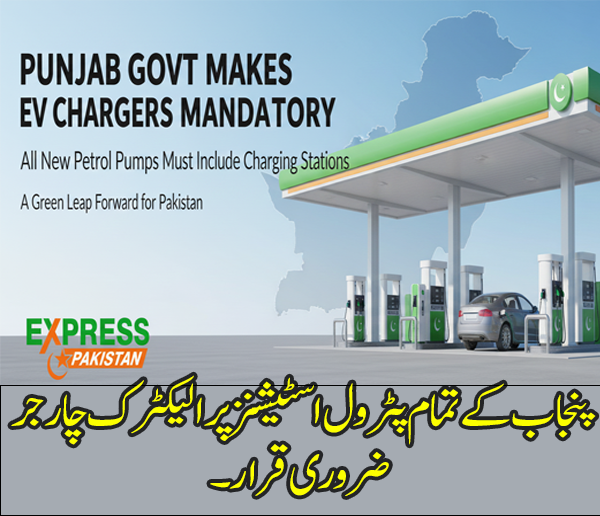
The Punjab EV charger policy marks a major step toward sustainable transportation in Punjab. The provincial government has made it mandatory for all new petrol pumps to install at least one electric vehicle (EV) charging station. This move directly addresses the growing demand for EV infrastructure and supports the increasing number of electric vehicle users across the region.
As EV adoption rises in Pakistan, one of the biggest challenges remains limited access to charging facilities. The Punjab EV charger initiative aims to solve this issue by integrating charging stations into fuel infrastructure from the very beginning. This ensures that new developments contribute to a cleaner and more efficient transport system.
Punjab EV Charger Rule for New Petrol Pump Licenses
Under the new regulation, the Punjab EV charger requirement is directly linked to petrol pump licensing. Every new fuel station must install a fully operational EV charging unit before receiving approval to operate. This ensures consistent growth in charging infrastructure without relying on older stations to upgrade.
By focusing on new petrol pumps, the government is adopting a proactive strategy. Instead of waiting for existing infrastructure to adapt, the Punjab EV charger policy guarantees that all future fuel stations are equipped for modern mobility needs.
In addition, authorities have streamlined the approval process. The removal of district-level design committee approvals for commercial projects has significantly reduced delays. This makes it easier for businesses to establish petrol pumps and EV charging facilities, encouraging faster expansion of the network.
Punjab EV Charger Expansion Plan Across Cities
The Punjab EV charger initiative goes beyond individual petrol pumps. The government has announced plans to develop approximately 2,000 EV charging stations across major cities, highways, and commercial areas. This large-scale expansion is designed to support both daily commuters and long-distance travelers.
One of the primary goals of this plan is to eliminate range anxiety among EV users. By ensuring widespread availability of charging stations, drivers can travel with confidence without worrying about running out of battery.
Cities such as Lahore, Faisalabad, and Rawalpindi are expected to play a key role in this expansion. These urban centers will act as hubs for EV adoption, driving the success of the Punjab EV charger network.
Additionally, commercial zones have been opened for EV charging installations with fewer regulatory barriers. This policy shift creates new opportunities for investors and businesses to enter the EV sector, further accelerating growth.
National Policies Support Punjab EV Charger Growth
The success of the Punjab EV charger initiative is also supported by national-level policies. The government of Pakistan has reduced electricity tariffs for EV charging stations, making it more affordable for operators to run these facilities.
Lower operational costs are expected to attract private companies, increasing competition and improving service quality for EV users. This benefits consumers by providing more accessible and cost-effective charging options.
Moreover, directives from the Prime Minister of Pakistan have emphasized the need to accelerate EV infrastructure development across the country. This unified approach ensures that provincial initiatives like the Punjab EV charger policy align with national goals.
Punjab EV Charger Policy and Future of Mobility
The Punjab EV charger requirement for new petrol pumps represents a forward-thinking approach to transportation. It not only expands charging infrastructure but also promotes cleaner energy and reduces dependence on fossil fuels.
As environmental concerns continue to grow, the shift toward electric vehicles is becoming increasingly important. The Punjab EV charger initiative plays a crucial role in facilitating this transition by making EV charging more accessible and convenient.
Looking ahead, this policy could serve as a model for other provinces in Pakistan. There is also potential for similar regulations to be applied to existing petrol pumps, further strengthening the EV ecosystem.
Conclusion
The Punjab EV charger policy is a significant step toward modernizing transportation in Pakistan. By making EV charging stations mandatory at new petrol pumps, the government is ensuring steady infrastructure growth while encouraging sustainable practices.
With strong provincial planning and national support, the Punjab EV charger initiative is set to transform how people travel, making electric vehicles a practical and attractive option for the future.