


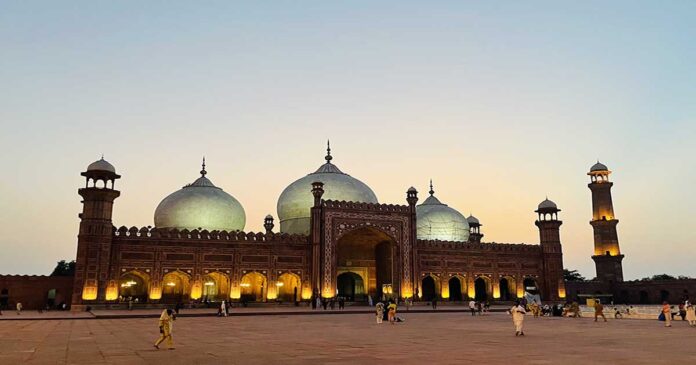
The Badshahi Mosque (بادشاہی مسجد) – One of the world’s largest mosques — a crowning jewel of Mughal civilization
The Badshahi Mosque Lahore — literally the “Imperial Mosque” — stands as one of Pakistan’s most iconic and recognisable landmarks. Built between 1671 and 1673 by the last great Mughal Emperor, Aurangzeb Alamgir, this colossal mosque held the distinction of being the world’s largest mosque for over three centuries. Today, it remains one of the five largest mosques on earth and the spiritual and architectural centrepiece of Lahore’s historic skyline.
Quick Information
| Category | Details |
| Location | Near Lahore Fort, Walled City, Lahore |
| Built | 1671–1673 AD |
| Builder | Emperor Aurangzeb Alamgir |
| Capacity | 100,000+ worshippers |
| Open | Daily, 6:00 AM – 10:00 PM |
| Entry Fee | Free (Museum: nominal fee) |
| Best Time | October – March |
| Duration | 1–2 hours |
History of the Badshahi Mosque
Emperor Aurangzeb commissioned the Badshahi Mosque Lahore in 1671. Workers completed the massive project in just two and a half years—a testament to the organisational might of the Mughal state. Fida’i Khan Koka, the emperor’s foster brother and governor of Lahore, designed the structure.
After the fall of the Mughal Empire, the mosque suffered significant damage. During Sikh rule in the early 19th century, Maharaja Ranjit Singh used the mosque as stables and a gunpowder magazine. These uses left visible scars on the structure. Later, the British colonial administration converted it to a military garrison. Restoration work only began in earnest after independence in 1947, which finally returned the mosque to its original function and glory.
Key Statistics
| Feature | Measurement / Data |
| Worshipper Capacity | 100,000+ people |
| Construction Time | 2.5 years |
| Courtyard Width | ~276 metres |
Architectural Brilliance: What Makes It Unique
The Badshahi Mosque Lahore represents a masterwork of late Mughal architecture. The design harmoniously blends red Rajput sandstone with white Makrana marble. The grand courtyard measures approximately 528 by 528 feet, allowing it to accommodate up to 100,000 worshippers during peak prayer times.
Key Architectural Features
- The Three Marble Domes: Three large white marble bulbous domes crown the prayer hall. Four octagonal minarets flank the main prayer chamber. During the 20th century, artisans restored these domes with fresh white marble.
- Four Corner Minarets: These four minarets rise to a height of about 62 metres, making them some of the tallest in Pakistan. Visitors can climb these towers for a panoramic view of the city.
- Red Sandstone Facade: Red Rajasthan sandstone covers the entire structure. The intricate geometric and floral patterns carved into the stone reflect Aurangzeb’s austere aesthetic.
Historical Fact: At its completion in 1673, this site was the largest mosque in the world. It held that record for nearly 313 years until workers completed the Faisal Mosque in 1986.
The Mosque Museum: A Hidden Gem
Located inside the mosque complex, the museum houses a remarkable collection of Islamic relics and artefacts associated with the Prophet Muhammad (PBUH) and his companions. Items on display include sacred hair strands, sandals, and manuscripts. Visitors must pay a separate nominal fee and wear modest dress to enter.
Etiquette & Rules for Visitors
As an active place of worship, the mosque maintains specific expectations for all visitors:
- Remove shoes before entering the prayer hall.
- Women must cover their heads; scarves are usually available at the entrance.
- Both men and women should wear clothing that covers arms and legs.
- Non-Muslims should avoid entering the main prayer hall during active prayer times.
Practical Visitor Tips
Best Time of Day: Visit at dawn or dusk for the most dramatic lighting. The red sandstone glows magnificently at sunset, and the lit domes look breathtaking at night.
Footwear: You will need to remove shoes before entering. Slip-on shoes are more practical. Staff provide shoe storage near all entrances.
Getting There: The site sits directly opposite the Lahore Fort’s Alamgiri Gate. You can take a rickshaw from Mall Road or use the Orange Line Metro.
Prayer Times: Plan your trip around the five daily prayers. The mosque draws its largest crowds on Fridays. For a peaceful exploration, visit on weekday mornings.
Badshahi Mosque vs Faisal Mosque: A Common Question
Many visitors ask how this site compares to Islamabad’s Faisal Mosque. While Faisal Mosque offers a larger total capacity and a striking modernist design, the Badshahi Mosque Lahore wins on historical depth, architectural authenticity, and visual grandeur. Modern builders simply cannot replicate this Mughal-era craftsmanship.
Frequently Asked Questions
Is Badshahi Mosque open to non-Muslim tourists?
Yes, the mosque warmly welcomes non-Muslim tourists. You can visit the courtyard, minarets, and museum at any time during opening hours.
Can you climb the minarets of Badshahi Mosque?
Yes, visitors can climb the minarets for a small fee. The top provides a spectacular view of the Lahore Fort, the Walled City, and the skyline.
How far is Badshahi Mosque from Lahore Fort?
The mosque sits literally across the road from Lahore Fort. The Hazuri Bagh garden separates the two. You can walk between them in less than five minutes.
Conclusion: A Monument to Eternity
The Badshahi Mosque Lahore is more than a place of worship—it is Pakistan’s architectural soul. Standing in its courtyard allows you to experience the scale and centuries of devotion embedded in every stone. Whether you visit as a believer or a history lover, this monument will leave a lasting mark on you.